Understanding NYC’s Pied-à-Terre Tax
 Updated September 30, 2026
For buyers considering a second home in New York, the surcharge should now be part of the broader carrying-cost conversation.
Owning a second home in New York City has long been part of the luxury real estate landscape. For some, it is a pied-à-terre used for a few months of the year. For others, it is a place to stay while working in the city, visiting family, or simply enjoying everything New York has to offer.
This year, a new non-primary residence property surcharge, commonly referred to as the pied-à-terre tax, added another consideration for certain owners and buyers of high-value New York City real estate.
Now, a new court ruling has added an important layer to the conversation.
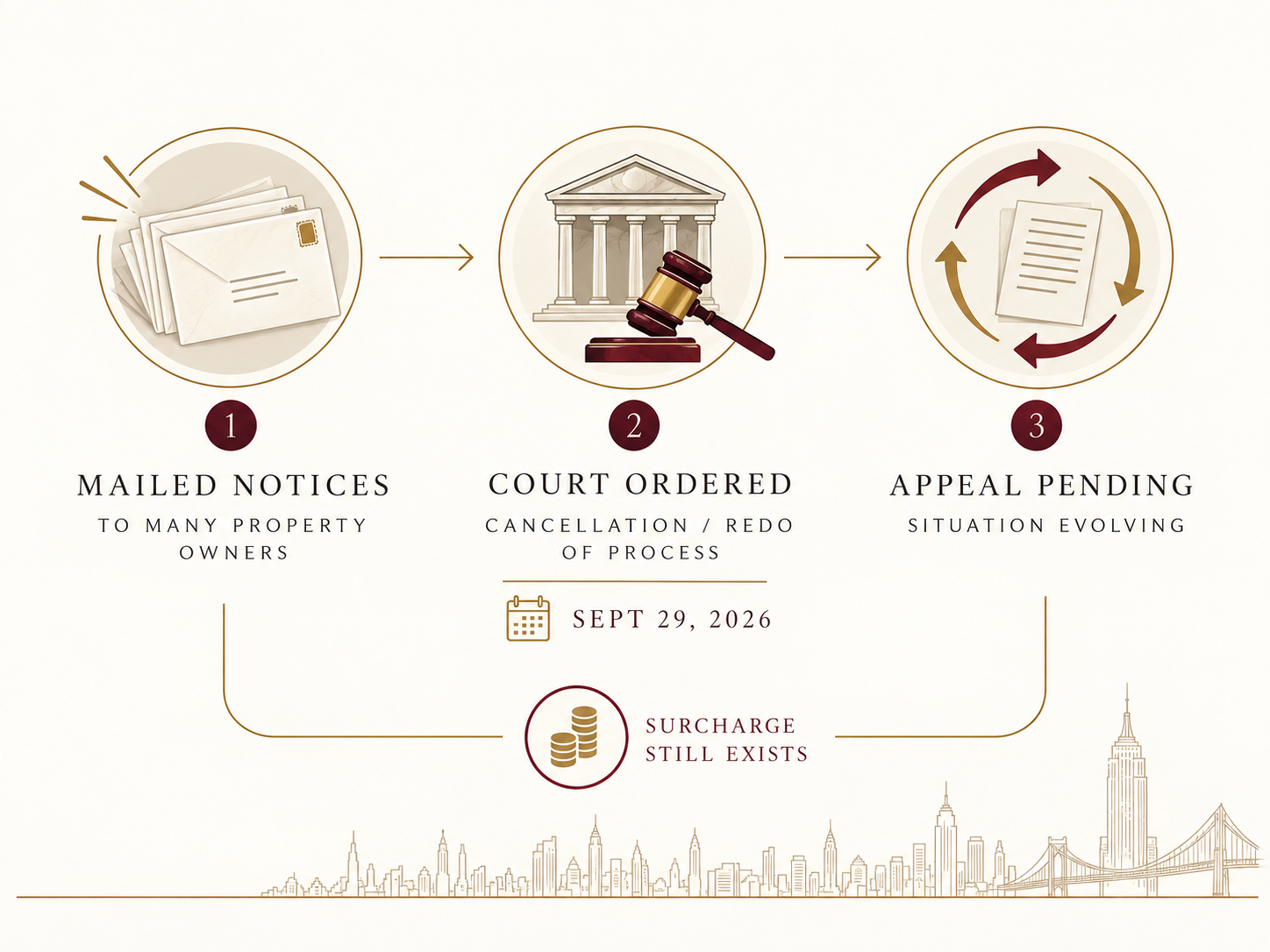
On September 29, a New York State Supreme Court judge ordered the city to cancel previously mailed surcharge notices and redo the process it used to determine which properties may actually be subject to the tax.
The surcharge itself, however, has not been struck down.
For owners, buyers, and sellers, that distinction matters.
What Changed This Week?
The New York City Department of Finance had mailed approximately 17,000 notices to property owners whose homes it believed might be subject to the new surcharge.
A judge has now ruled that the city’s process improperly placed too much responsibility on homeowners to prove that their properties were primary residences before the city had made an individualized determination of who actually owed the surcharge.
The court ordered the city to cancel the previously mailed notices and replace its broad supplemental property roll with a more targeted process.
But the story is not over.
New York City has appealed the ruling, temporarily staying the judge’s order while the case continues.
That means this is an evolving situation, and property owners should continue monitoring official guidance rather than assuming the surcharge or its requirements have disappeared.
The Pied-à-Terre Tax Still Exists
The most important distinction is that the September ruling addressed how the city implemented the surcharge, not whether the underlying surcharge is valid.
Under the current law, the annual surcharge may apply to certain high-value residential properties in New York City that are not being used as a primary residence.
For the 2026-27 and 2027-28 property tax years, that includes:
- One-, two-, and three-family homes with a Department of Finance market value of $5 million or more
- Condominium and cooperative units with a Department of Finance market value of $1 million or more
Separate lawsuits are now challenging the legality of the surcharge itself, so this remains an area buyers and owners should continue to follow closely.

DOF Market Value Is Not the Purchase Price
This remains one of the most important details for buyers and owners to understand.
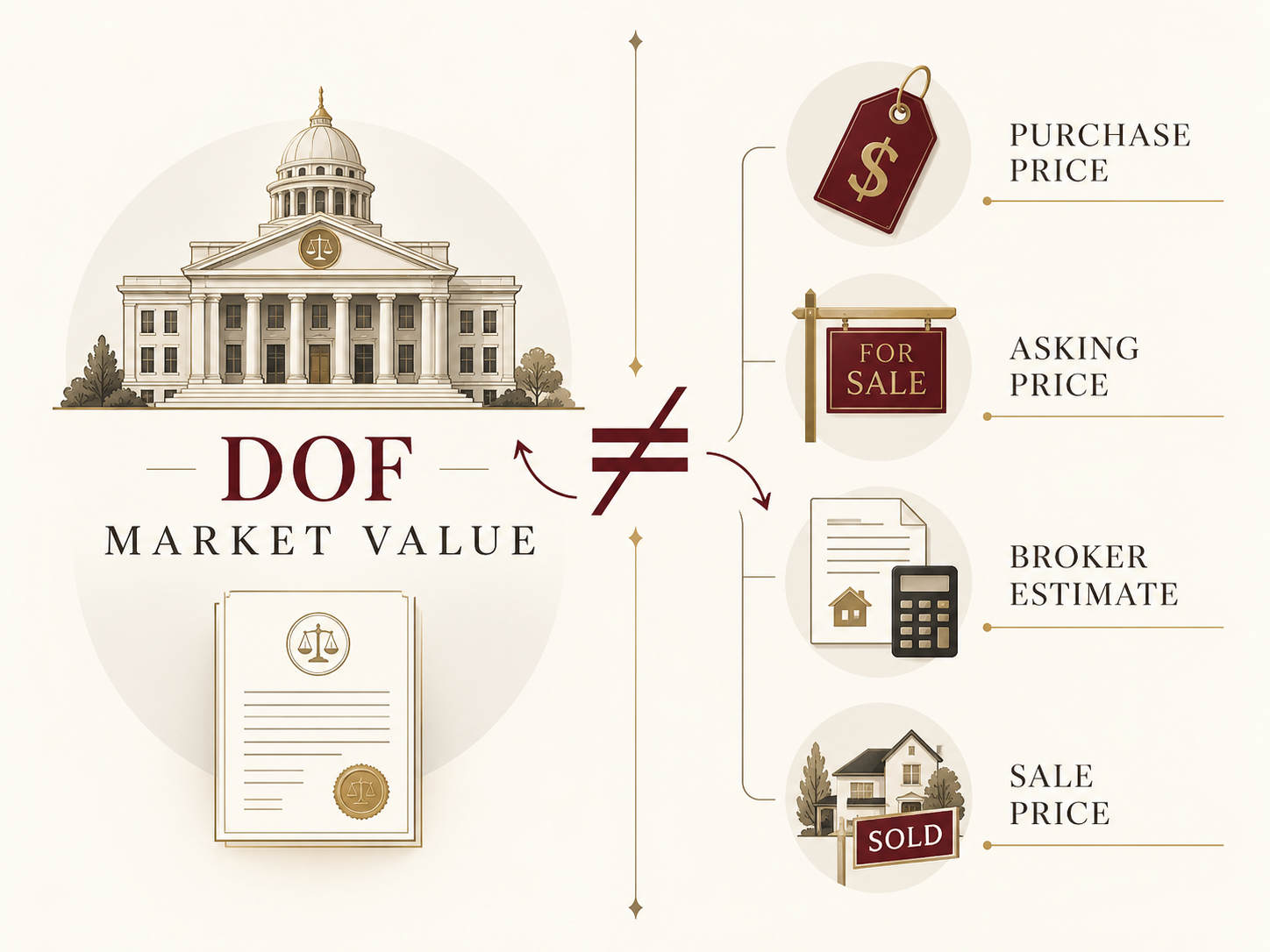
The surcharge thresholds are based on the property’s New York City Department of Finance market value.
That is not necessarily the same as:
- The price you paid
- The property’s current asking price
- A broker’s estimate of market value
- What the property might sell for today
New York City’s property tax valuation system treats different types of residential property differently, particularly condos and co-ops.
A luxury apartment that trades for several million dollars may therefore have a Department of Finance market value that looks very different from its actual sale price.
How Much Could the Surcharge Be?
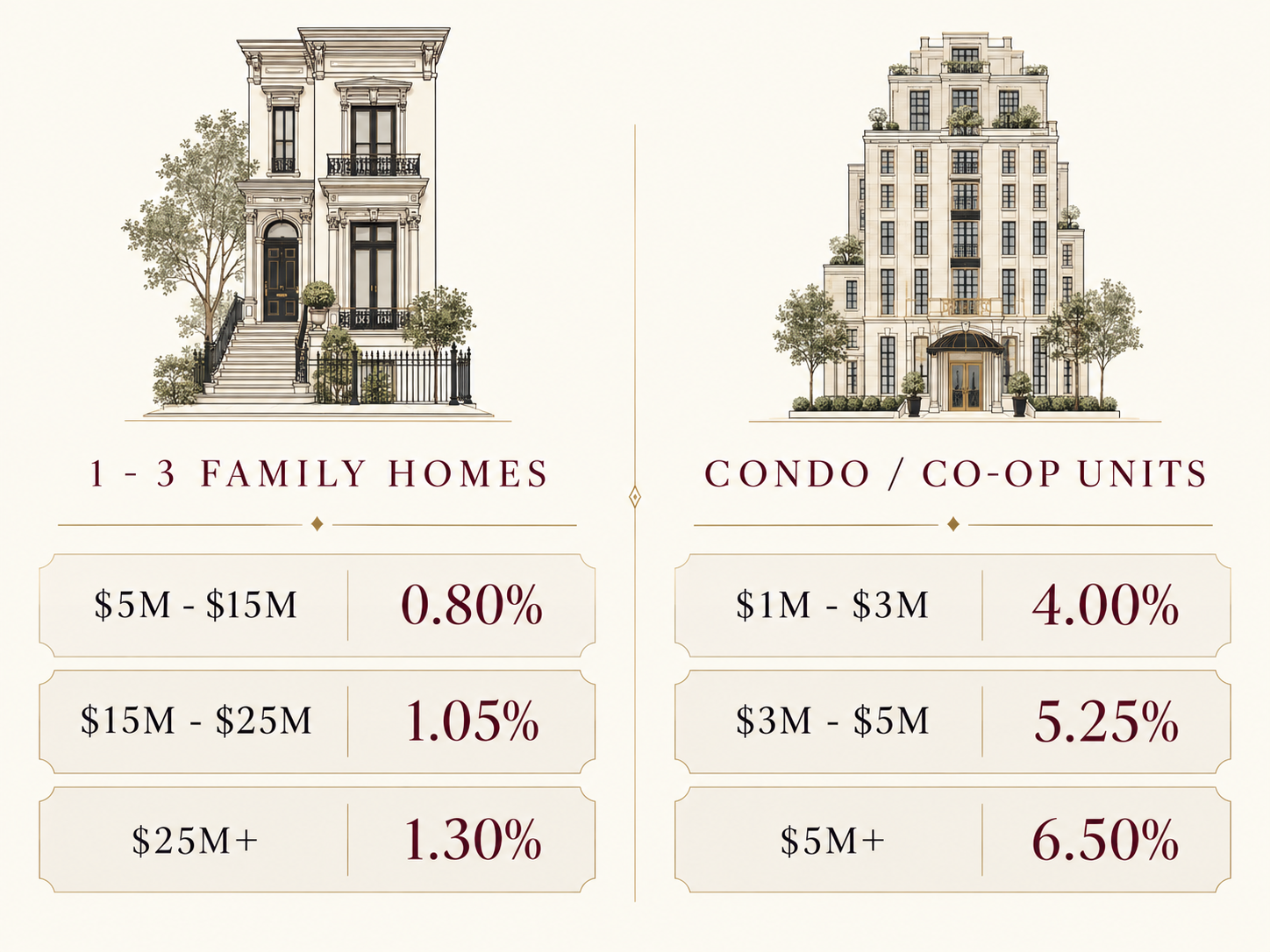
For the 2026-27 and 2027-28 property tax years, the current surcharge structure is graduated according to property type and Department of Finance market value.
One-, Two-, and Three-Family Homes
$5 million to under $15 million: 0.80%
$15 million to under $25 million: 1.05%
$25 million or more: 1.30%
Condominium and Cooperative Units
$1 million to under $3 million: 4.00%
$3 million to under $5 million: 5.25%
$5 million or more: 6.50%
Because the calculation is tied to Department of Finance value rather than conventional market value, owners should review the actual tax record before estimating potential exposure.
Primary Residence Status Can Change the Answer
A high Department of Finance value alone does not necessarily mean a property will be subject to the surcharge.
The surcharge generally does not apply when the property is used as a primary residence by a qualifying person.
That can include:
- The owner
- A tenant or subtenant
- An immediate family member of the owner
- Certain individuals who collectively hold a majority interest in an LLC, corporation, or partnership that owns the property
- Certain beneficiaries of a trust
In other words, occupancy can matter just as much as ownership.
That was also at the center of the recent legal dispute, with homeowners arguing that the city should have done more to determine residency before sending notices.

Received a Notice? The Situation Has Changed
This is the section owners should pay especially close attention to.
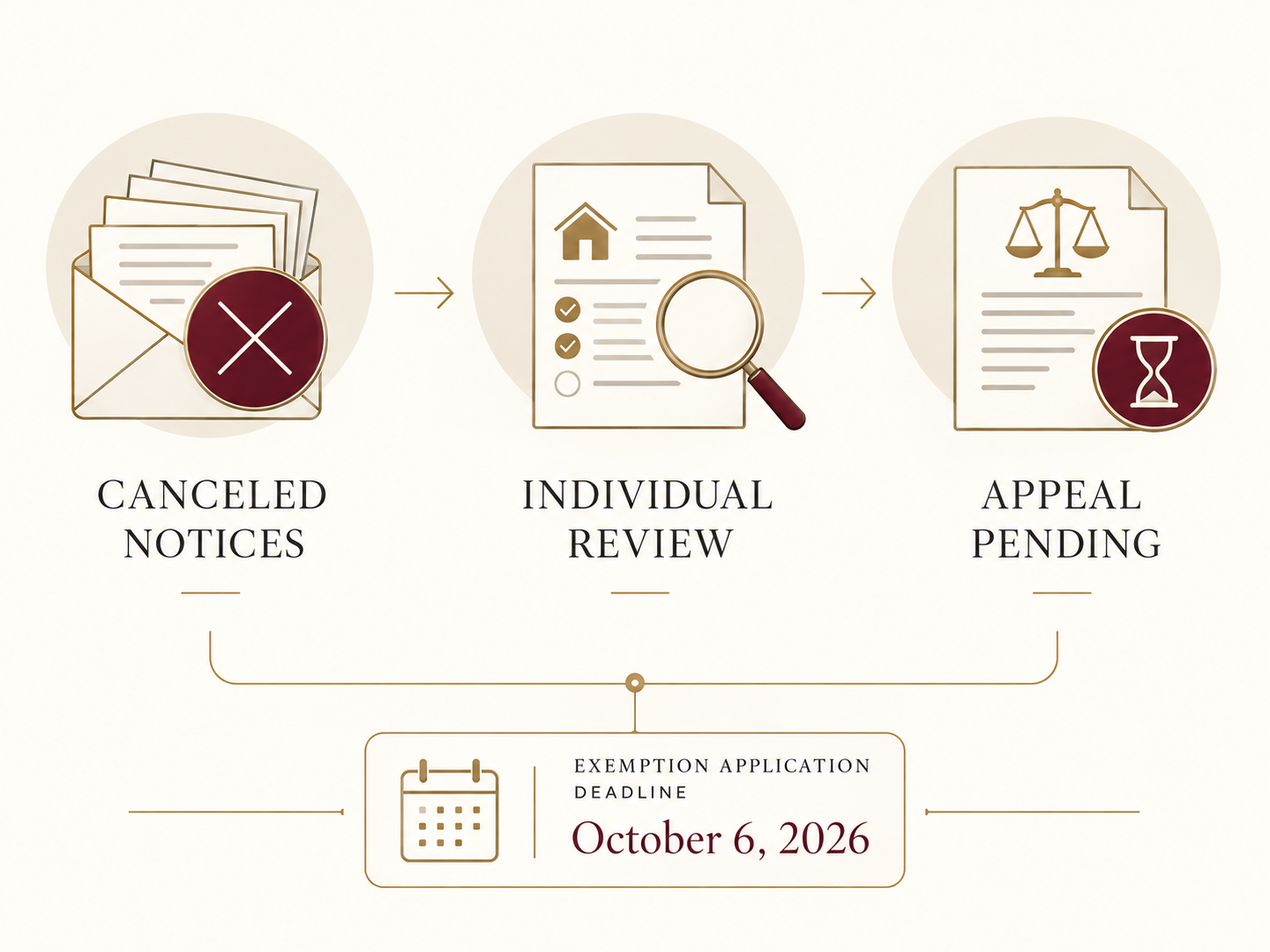
The September 29 court ruling ordered the previously mailed notices to be canceled and required the Department of Finance to make individualized determinations before issuing new ones.
However, because the city appealed the ruling, the situation remains in flux.
As of September 30, the Department of Finance continues to publish an October 6, 2026 deadline for exemption applications.
For that reason, anyone who received a notice should not simply assume that no action is required.
Instead, owners should confirm their current obligations with the Department of Finance and discuss their individual circumstances with their attorney or tax advisor.
This is exactly the kind of rapidly changing situation where relying on an older notice, headline, or online summary may not be enough.
What Documentation May Matter?
For owners seeking to establish that a property is being used as a primary residence, documentation may include items such as:
- A recently filed federal or state tax return
- A driver’s license or other government-issued identification
- Proof of residency
- A current lease
- Utility bills or proof of rent payments
- Documents establishing a qualifying family relationship
- LLC, partnership, corporate, or trust documentation
The requirements depend on the property’s occupancy and ownership structure.
That is another reason entity-owned properties, family arrangements, and trusts may require additional professional review.

What Buyers Should Consider Before Purchasing
For buyers considering a second home in New York, the surcharge should now be part of the broader carrying-cost conversation.
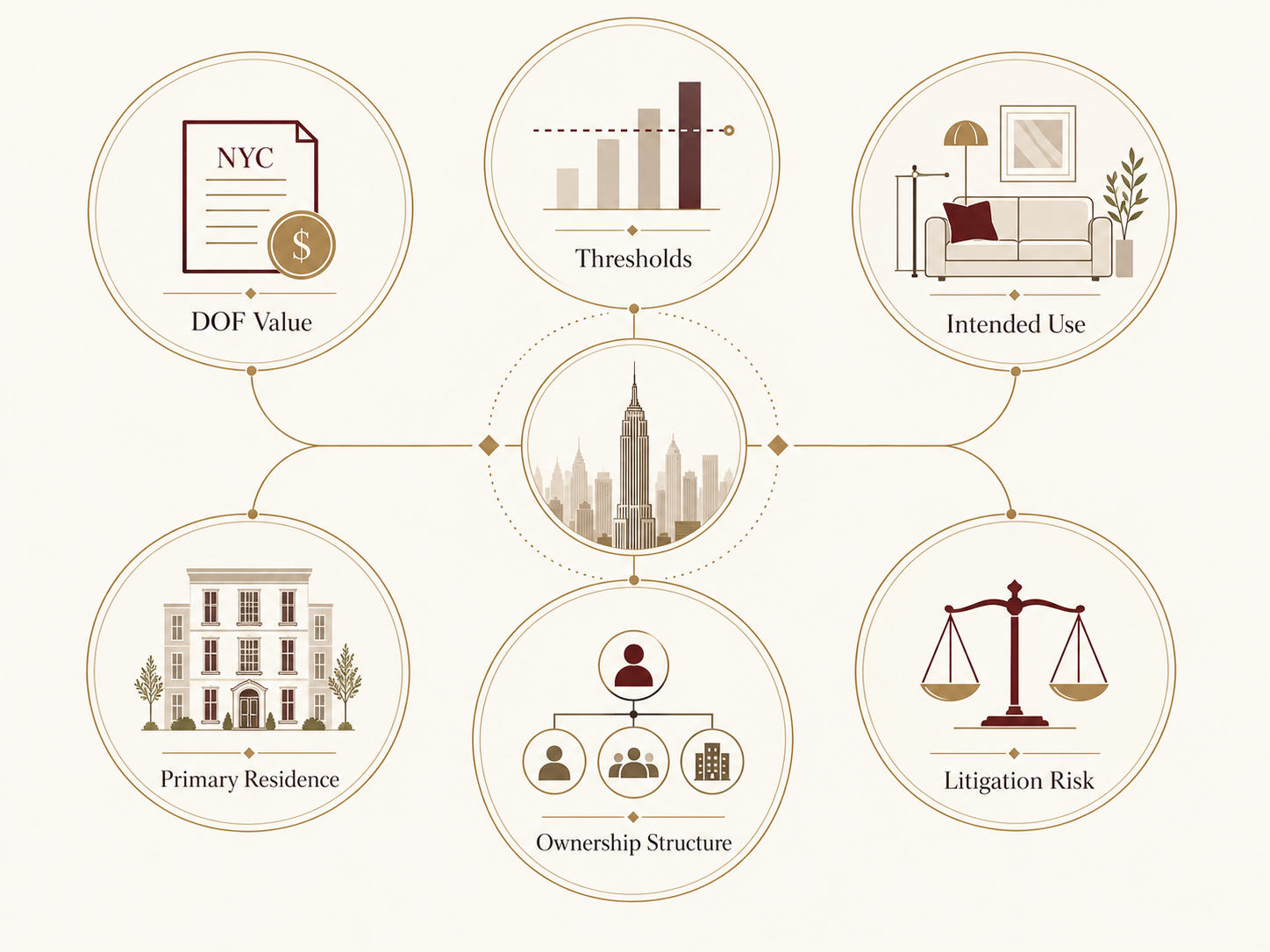
Before purchasing, it is worth understanding:
- The property’s current Department of Finance market value
- Whether the property falls within the statutory thresholds
- How you intend to use the residence
- Whether anyone will occupy it as a primary residence
- How the property will be owned
- The potential surcharge exposure
- Whether pending litigation could affect future obligations
Luxury buyers already consider common charges, maintenance, property taxes, financing, insurance, and closing costs when evaluating a home.
Potential pied-à-terre taxation is another factor that should now be reviewed early in the process.
What Sellers Should Know
Sellers should be paying attention too.
A prospective buyer considering a property as a second residence may have questions about the surcharge and how it could affect annual carrying costs.
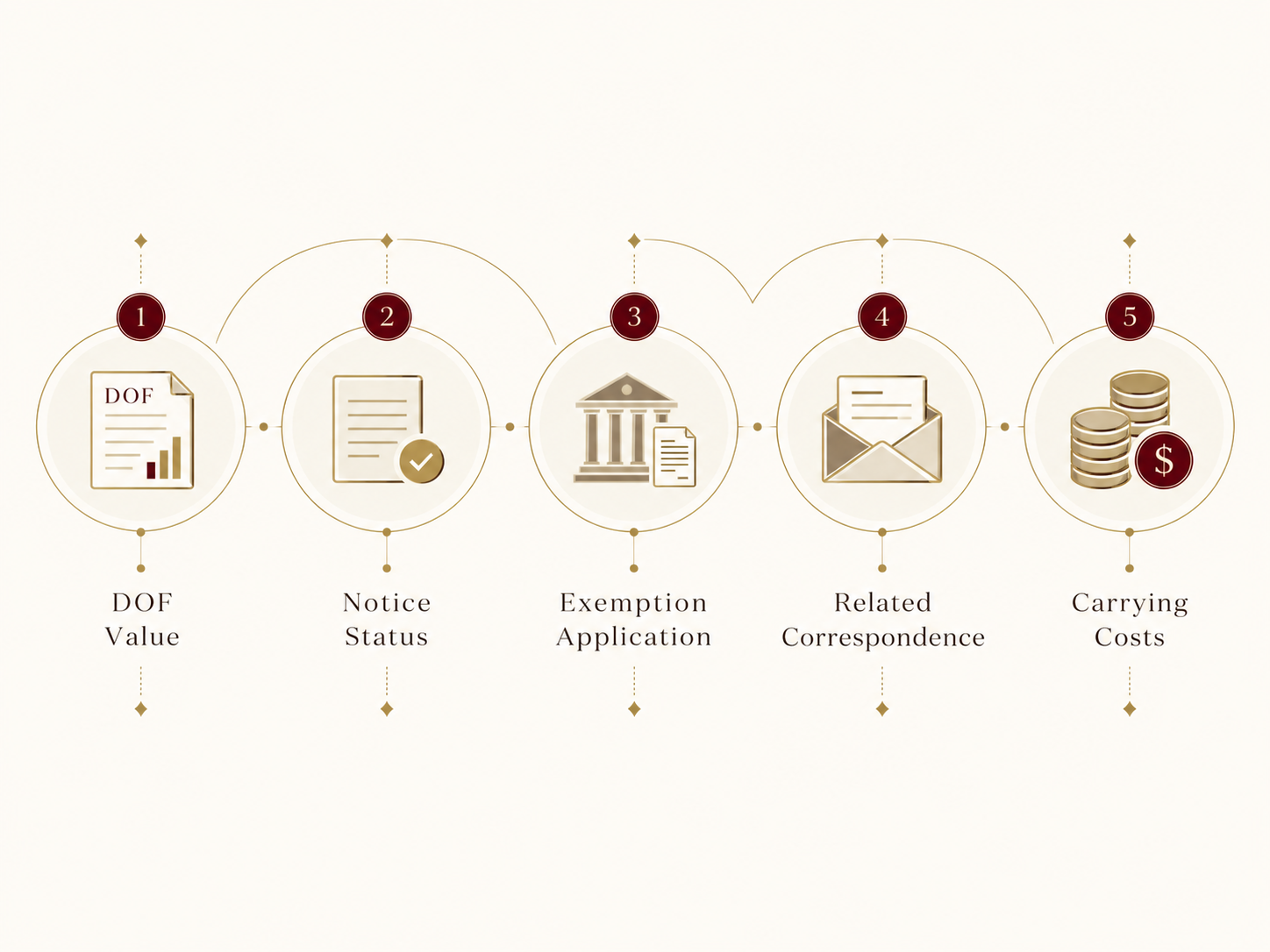
Sellers should understand the property’s Department of Finance value and know whether any surcharge notice, exemption application, determination, or related correspondence exists.
Clear information can help prevent unnecessary uncertainty later in the transaction.
For sellers, transparency matters.
For buyers, understanding the full cost of ownership matters.
When Ownership Gets More Complicated
New York real estate rarely follows a single formula.
A property may be owned through an LLC, trust, corporation, or partnership. A family member or tenant may occupy the residence. Residency can change. A buyer’s intended use of a home can evolve. An owner may also disagree with the Department of Finance’s valuation.
Now there is an additional consideration: an active legal challenge surrounding how the surcharge is being administered, along with separate litigation challenging the tax itself.
Those circumstances require more than a quick online calculation.
A real estate advisor can help identify the issues that need to be explored, but questions involving tax liability, exemptions, constitutional challenges, entity structures, residency, or legal deadlines belong with qualified attorneys and tax professionals.

Why Staying Informed Matters
The latest developments are a good reminder that buying or owning property in New York involves much more than following listing prices.
Tax policy, ownership structure, carrying costs, regulatory changes, and even court decisions can affect the bigger picture.
And sometimes the information changes quickly.
Our role as real estate advisors is not to replace attorneys or accountants. It is to stay informed, recognize the issues that may affect our clients, ask the right questions early, and make sure the appropriate professionals are part of the conversation.
Verify the facts. Understand the costs. Follow the latest developments. Bring in the right professionals.
The Bottom Line
The September 29 ruling represents an important change in New York City’s rollout of the pied-à-terre surcharge, but it does not mean the tax has disappeared.
The original notice process has been challenged successfully at the trial-court level, the city has appealed, the implementation process remains unsettled, and separate legal challenges to the surcharge itself are continuing.
For current owners, the message is simple: do not rely on assumptions based on either the original notice or the latest headline.
For buyers considering a second home in New York, understanding Department of Finance value, intended use, ownership structure, and potential tax exposure should remain part of the due diligence process.
New York real estate is constantly evolving, and this is one development worth watching closely.
Thinking about buying, selling, or owning a second home in New York City? Let’s start the conversation and make sure you have the right information and professional team in place.
This information is current as of September 30, 2026 and is provided for general educational purposes only. It should not be considered legal, accounting, or tax advice. Court proceedings, Department of Finance procedures, deadlines, valuations, and tax requirements may change. Consult your attorney, accountant, tax advisor, and relevant government agencies regarding your specific circumstances.