
The New York City real estate industry is having one of its most consequential conversations in years:
Who should control the distribution of a seller’s listing, and ultimately, who gets access to it?
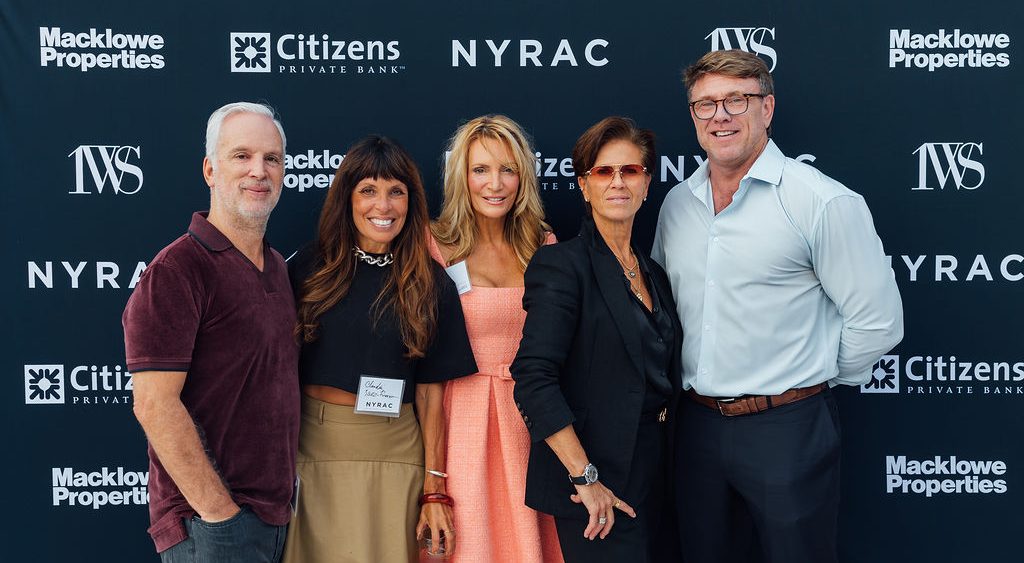
That question was front and center at a recent NYRAC (New York Residential Agent Continuum) leadership panel moderated by Stefani Berkin, featuring Michael Liebowitz of Douglas Elliman, Rory Golod of Compass, and Shaun Osher of CORE.
Bringing leaders from competing firms together for a candid discussion was meaningful in itself.
At a time when brokerages, listing portals, and technology platforms are increasingly competing for the consumer relationship, the conversation brought the focus back to where it belongs:
Our clients.
The StreetEasy Question
Much of the current conversation in New York centers around StreetEasy and the evolving distribution strategies being pursued by Compass and some of its affiliated brands.
StreetEasy’s current policy requires a sale listing that is publicly marketed to also be submitted to StreetEasy that same calendar day.
Compass, meanwhile, has increasingly emphasized a different approach to bringing properties to market, including its own ecosystem, Private Exclusives, Coming Soon marketing, Compass.com, and other distribution channels.
At the center of the discussion is a fundamental question about how a seller’s property should enter the marketplace.
Should a property first be introduced strategically to a more limited audience, giving the seller greater control over timing and positioning? Or, once a seller decides to market publicly, should that property immediately be exposed to the broadest possible pool of buyers?
There are arguments behind both approaches.
Compass has argued that phased and private marketing can give sellers more control over timing, pricing, privacy, and the way a property first enters the market.
Others within the industry believe that once a seller has decided to publicly market a home, limiting its distribution could also limit the universe of buyers who have the opportunity to see it.
And in New York City, StreetEasy remains a significant part of how consumers search for homes.
But the Bigger Conversation Was About Trust

What I appreciated most about the NYRAC discussion was that it ultimately moved beyond one brokerage or one platform.
One of the strongest themes was trust.
As Shaun Osher emphasized during the conversation, the future of our industry ultimately comes back to individual real estate professionals and the decisions we make on behalf of our clients.
The discussion also reinforced the importance of following the client’s objectives rather than allowing competition between companies or platforms to determine the strategy.
That resonated with me.
After more than two decades selling New York City real estate, I believe our greatest value has never simply been access to a listing.
It is our ability to advise.
To understand a seller’s objectives.
To know where buyers are actually searching.
To interpret market data.
To price correctly.
To negotiate.
To communicate.
And most importantly, to make recommendations that put the client’s interests first.
Technology changes. Companies change. Portals change. Business models change.
Trust is the constant.
Distribution Matters
The StreetEasy conversation also raises a practical question every seller should be asking their broker:
Where will my property actually be seen?
Compass has made a significant investment in developing its own consumer ecosystem and driving traffic through its websites, agent networks, private inventory, and other marketing channels.
At the same time, StreetEasy remains one of New York City’s major residential search destinations, and the disagreement over listing distribution has become increasingly public.
But for sellers, the conversation should not simply be Compass versus StreetEasy.
The more important question is:
What distribution strategy gives my particular property the greatest opportunity to reach the right buyers?
A $1 million apartment may require one strategy.
A $10 million townhouse may require another.
A seller who prioritizes privacy may make a completely different decision from someone whose primary objective is maximum exposure and competitive bidding.
There should not be a one-size-fits-all answer.
There should be an informed strategy built around the individual client.
Collaboration Makes Us Better Advisors
What Sellers Should Be Asking

The current debate makes it more important than ever for sellers to understand exactly how their property will be marketed.
Before choosing a strategy, some of the questions worth asking include:
Where will the listing appear?
Who will be able to see it?
Will buyers represented by competing brokerages have access?
Will it appear on StreetEasy?
Will it appear on the brokerage’s own website?
Is there a private or coming-soon period?
What are the potential advantages of limiting exposure?
What are the potential disadvantages?
And most importantly:
Why is this strategy right for my property and my objectives?
The answer should never simply be because a brokerage prefers one distribution model.
The recommendation should make sense for the seller.
What This Means for Buyers

There is another side to the conversation that matters just as much.
Buyers increasingly need to understand that the inventory visible on any single website may not represent every opportunity in the market.
Some properties may be marketed privately. Others may appear through brokerage websites, agent networks, the RLS, StreetEasy, or other channels.
That makes relationships between brokers increasingly important.
A good buyer’s agent is not simply refreshing a search portal.
We are speaking with listing agents. We are communicating with colleagues across brokerages. We are hearing about properties before and as they enter the market. We are tracking pricing, activity, and changes that cannot always be understood from a listing page alone.
Access matters, but knowing how to navigate that access matters even more.
The Broker Still Matters
For all the discussion about portals, algorithms, private networks, and technology, real estate remains intensely human.
A seller is trusting us with what is often one of the largest financial assets they own.
A buyer may be making one of the largest purchases of their life.
Our responsibility is not to push a corporate agenda.
Our responsibility is to explain the choices, the advantages, the limitations, and the consequences, and then allow the client to make an informed decision.
The technology should support the broker.
The brokerage should support the broker.
And the broker should support the client.
That relationship should remain at the center of every decision.
Where Does NYC Real Estate Go From Here?
No single panel discussion is going to resolve the larger debate over listing distribution in New York.
The industry is changing quickly, and different companies will continue experimenting with technology, private networks, public portals, and new ways of reaching consumers.
That makes conversations like this even more important.
Bringing Michael Liebowitz, Rory Golod, and Shaun Osher together, under Stefani Berkin’s moderation, created an opportunity to hear different perspectives openly rather than simply viewing the issue through the lens of one company.
We may represent different brokerages.
We may disagree about distribution.
We may use different technology.
We may even have fundamentally different ideas about how a property should reach the marketplace.
But one principle should remain universal:
The client comes first.
A special thank you to Jason Haber, President of NYRAC, for continuing to create opportunities for New York’s real estate community to have these conversations openly, and to NYRAC for bringing industry leaders with different perspectives into the same room.
The future of New York real estate will not be shaped simply by which platform becomes the largest or which company builds the biggest network.
It will also be shaped by whether buyers and sellers continue to trust us to explain their options clearly, advocate for their interests, and help them make informed decisions.
That is a responsibility worth protecting.