

There’s a question I hear often: Is now a good time to buy or sell in New York City?
After 25 years in real estate, I’ve learned that the answer is rarely as simple as a market headline suggests.
Two people can be looking at the same market and making completely different decisions. One seller may be ready to move on but not ready to buy again. An investor may recognize an opportunity where another buyer sees uncertainty. And a home that checks all the right boxes can still attract considerable competition.
These are the decisions that interest me most because they reveal what’s actually happening beyond the statistics.
I recently explored four of these patterns in an article for Commercial Observer. Here is how they’re playing out in real transactions and what they may mean for buyers and sellers navigating New York today.
1. Selling Doesn’t Always Mean Buying Again Right Away

Traditionally, we tend to think of selling and buying as two parts of the same move.
But I’m seeing more clients approach that transition differently.
At 60 Warren Street, Residence 3, in Tribeca, our team relaunched a home whose owners ultimately decided to rent on the Upper East Side rather than immediately purchase another property.
It was a thoughtful decision.
They had successfully sold their home, but rather than rush into another purchase, they gave themselves the flexibility to experience a different neighborhood and wait for a property that truly suited their next chapter.
I think this is an important distinction. Renting after selling isn’t necessarily a step backward. For some clients, it creates the freedom to make a better long-term decision.
What this means for sellers: You don’t always need to have your next purchase figured out before deciding to sell. The right strategy can give you more options, not fewer.
2. Investors Are Selective, but They’re Still Active
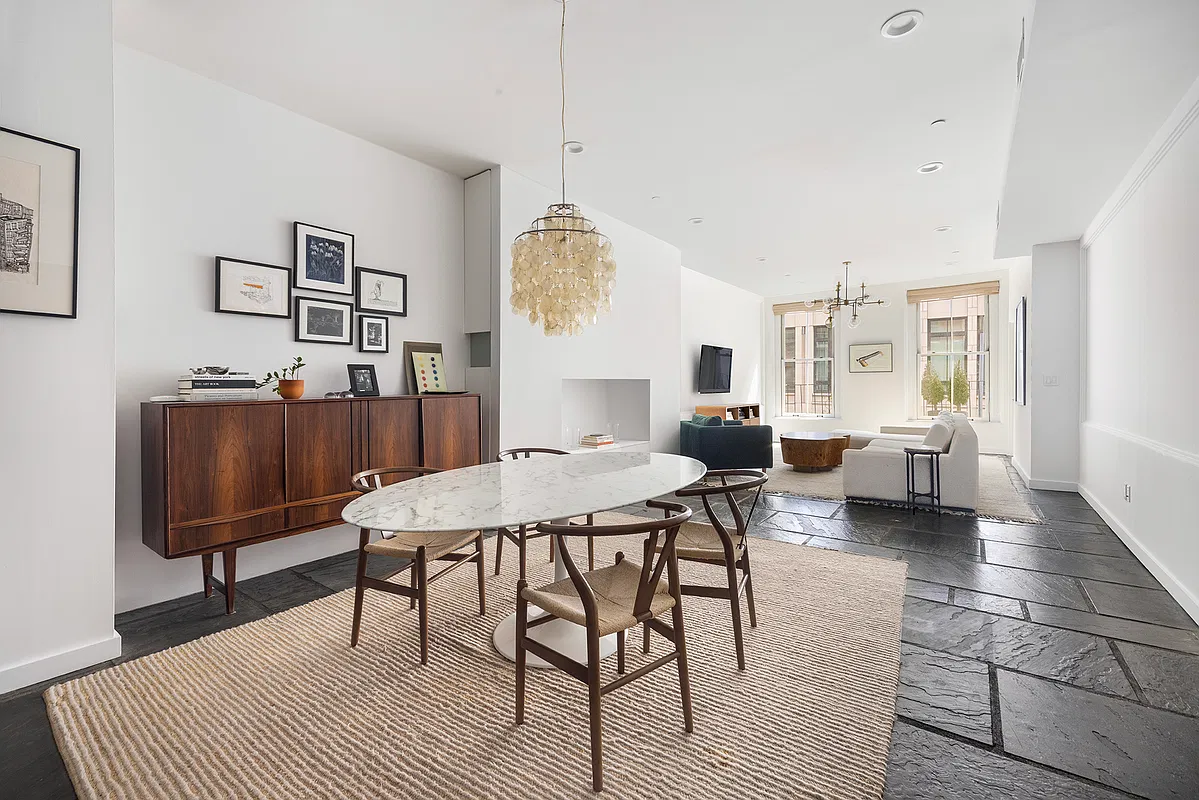
New York remains a city where location, rental demand, and long-term ownership considerations influence investment decisions.
But today’s investors are paying close attention to the details.
Recently, we represented a buyer at 25 Leonard Street, Residence 2, who purchased the property as an investment with plans to lease it.
The decision was based on the property’s long-term usefulness and its appeal within the Downtown rental market.
Not every apartment makes an equally compelling investment.
Building rules, monthly carrying costs, potential rental income, financing, and the quality of the residence all deserve careful consideration.
The buyers who understand these factors are better positioned to recognize opportunities when they appear.
What this means for investors: Rather than waiting for the perfect market conditions, focus on finding a property whose fundamentals support your goals.
3. The Right Home Can Still Inspire Competition

One of the most interesting things about the New York market is how differently buyers respond to individual properties.
Some homes sit on the market because their price, presentation, or layout doesn’t align with buyer expectations.
Others attract immediate interest.
At 7 East 124th Street, our team brought a townhouse back to market with a refreshed presentation that included virtual staging and video.
The property ultimately sold above asking price.
That doesn’t mean every home will achieve the same result.
It demonstrates how important it is to help buyers recognize a property’s value and potential.
When someone has been searching for the right combination of location, character, layout, and livability, finding that match can create a strong emotional response.
And in real estate, emotion and sound financial judgment often work together.
What this means for sellers: Presentation is not simply about making a home look attractive. It’s about helping the right buyers understand why the property deserves their attention.
4. Off-Market Opportunities Are Becoming More Intentional
I’ve always believed that relationships are one of the most valuable parts of real estate.
Today, those relationships extend across traditional broker networks, private introductions, digital platforms, and social media.
At 60 Warren Street, Residence 3, the eventual buyers first discovered the property through one of my Instagram Stories during our private relaunch.
That initial connection developed into a successful transaction.
It was a reminder that an opportunity doesn’t always need to be publicly advertised to reach the right person.
For some sellers, a private approach offers a level of discretion and control over the marketing process.
For buyers, working with a well-connected advisor can provide access to conversations and opportunities they might otherwise miss.
Of course, off-market selling isn’t the right strategy for every property. Broad public exposure can be valuable, and the best approach depends on the seller’s objectives.
What this means for buyers and sellers: Access matters, but so does knowing when a private strategy makes sense and when a wider audience will better serve the transaction.
What the Third Quarter Tells Us
The Douglas Elliman Q3 2026 Manhattan market report provides another layer of perspective.
Quarterly reports help us understand changes in pricing, inventory, and transaction activity across the borough.
But Manhattan is not one uniform market.
A Tribeca loft, a West Village townhouse, and an Upper East Side cooperative may attract entirely different buyers and respond to different pricing dynamics.
Even within the same neighborhood, two apartments in the same building can perform differently based on their floor, light, layout, condition, and presentation.
That’s why I always look at market data alongside the specific characteristics of the property and the circumstances of the client.
Read the Douglas Elliman Q3 Manhattan Report
Perspective Matters More Than Predictions
If there’s one thing these four signals have in common, it’s that people are making increasingly intentional decisions.
Some are prioritizing flexibility. Others are focused on long-term investment. Some recognize a rare opportunity and move decisively. And others benefit from access to properties that haven’t reached the broader market.
The most successful real estate strategy isn’t necessarily about predicting what happens next.
It’s about understanding your options, recognizing the right opportunity, and having the experience and relationships to act when the moment comes.
I shared more about these trends in my recent Commercial Observer feature.
Read My Commercial Observer Article
If you’re considering buying, selling, or exploring private opportunities in Manhattan, I’d welcome a conversation about what the current market means for you.
Connect With the SAEZFROMM Team
Claudia Saez-Fromm
nyLife/ | A New York life, thoughtfully curated.
