
Courtesy Bonhams
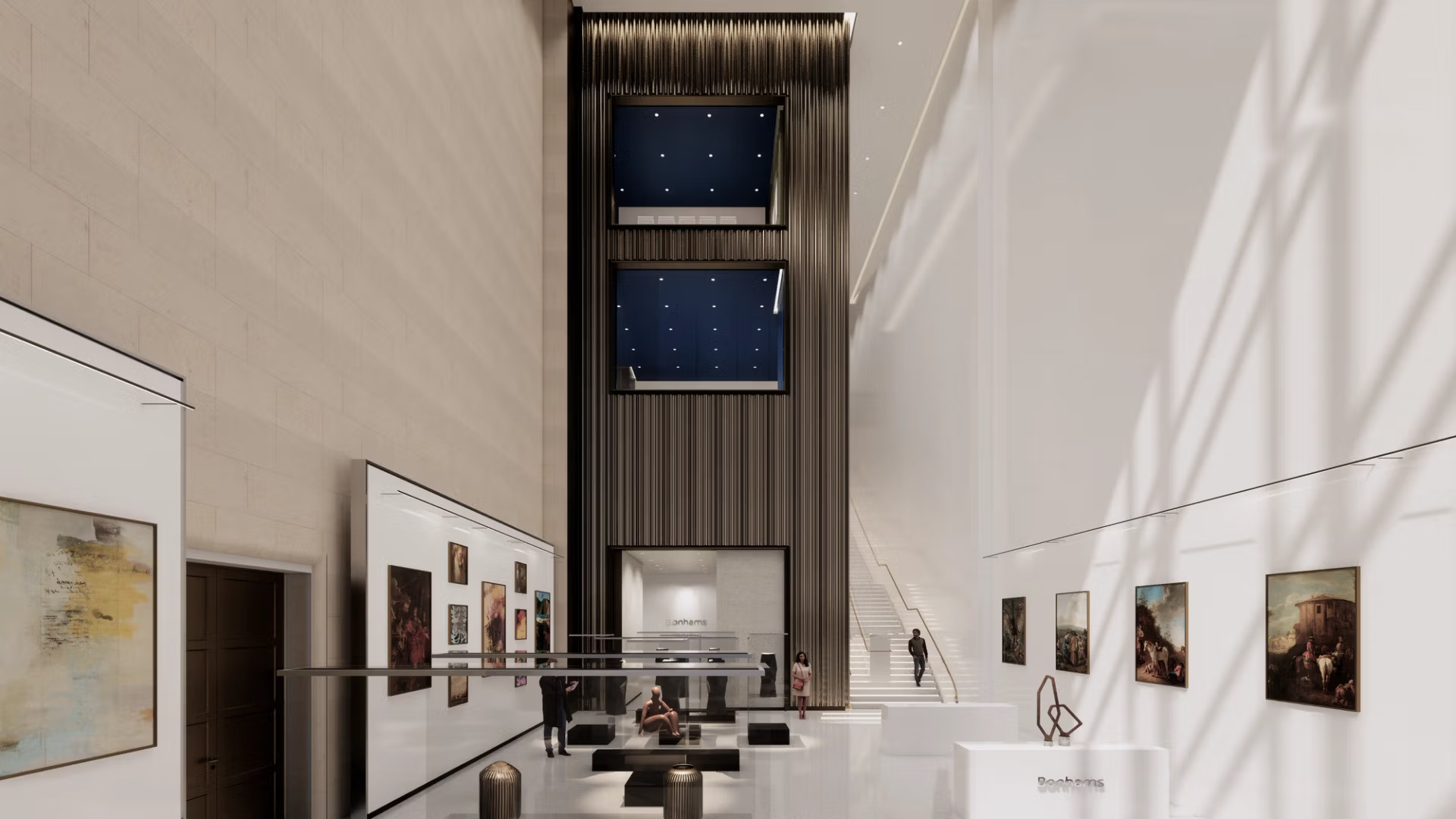
On a stretch of 57th Street defined by supertalls, record-breaking sales, and global capital, Bonhams has made a strategic move: a 42,000-square-foot flagship on Billionaires’ Row — seamlessly blending museum-grade contemporary design with one of New York’s most storied cultural interiors.
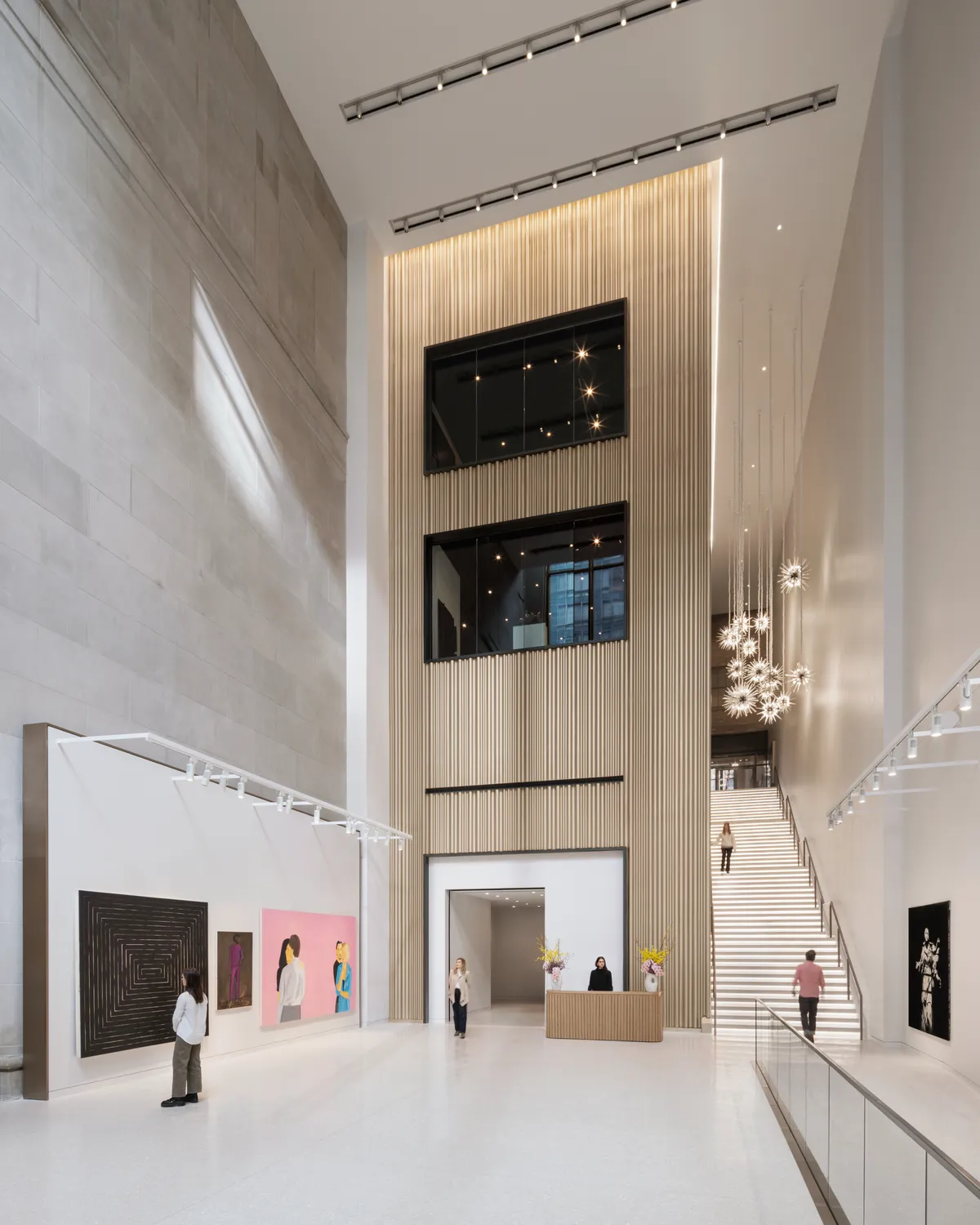

Photo: Colin Miller/Courtesy Bonhams
If you’re in the business of selling Basquiats and Birkins to the world’s wealthiest collectors, location matters. But so does legacy. And few addresses carry the layered resonance of Steinway Hall.
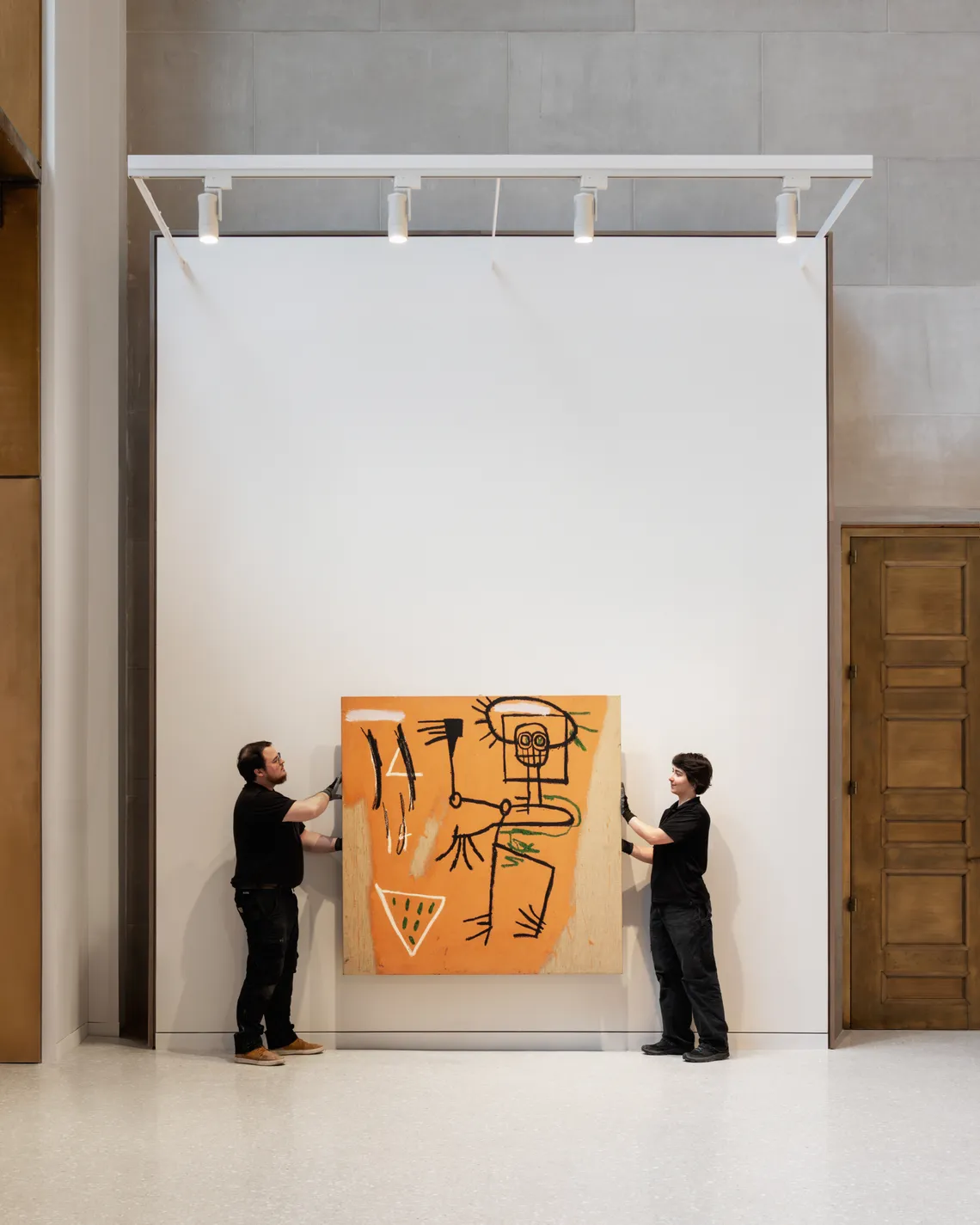
A Basquiat by the front window might catch the eyes of passersby. Photo: Colin Miller
A Modern Gallery Meets a Musical Landmark
From the new 57th Street entrance, the space feels like a pristine contemporary museum: pale floors, soaring ceilings, and a full wall of glass that frames whatever masterpiece happens to be on view — from a bubblegum-pink Alex Katz to a rare timepiece.
But step through brass doors embedded in a stone wall, and the mood shifts dramatically.
You enter the restored rotunda of Steinway & Sons’ landmarked Steinway Hall — an octagonal, domed reception space once revered by the world’s greatest musicians. Here, the acoustics were engineered to elevate a single piano at center stage.
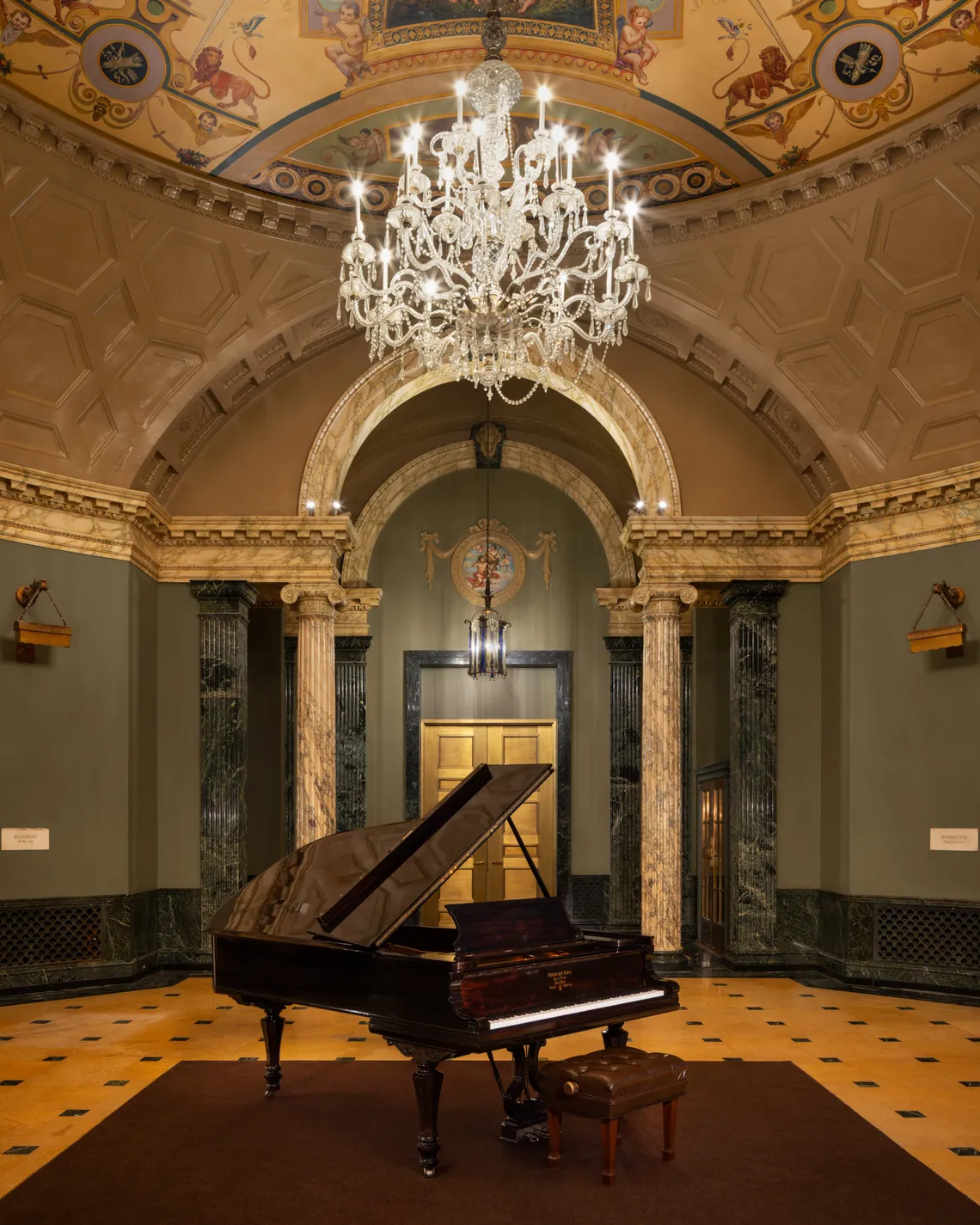
Photo: Colin Miller/Courtesy Bonhams

Courtesy Bonhams
It was in this very room that Sergei Rachmaninoff inaugurated the building with a concert. A lost Chopin waltz debuted here. Leonard Bernstein hosted gatherings before crossing to Carnegie Hall. Billy Joel stopped by.
For decades, pianists made pilgrimages to this address before Steinway sold the property in 2013 and relocated.
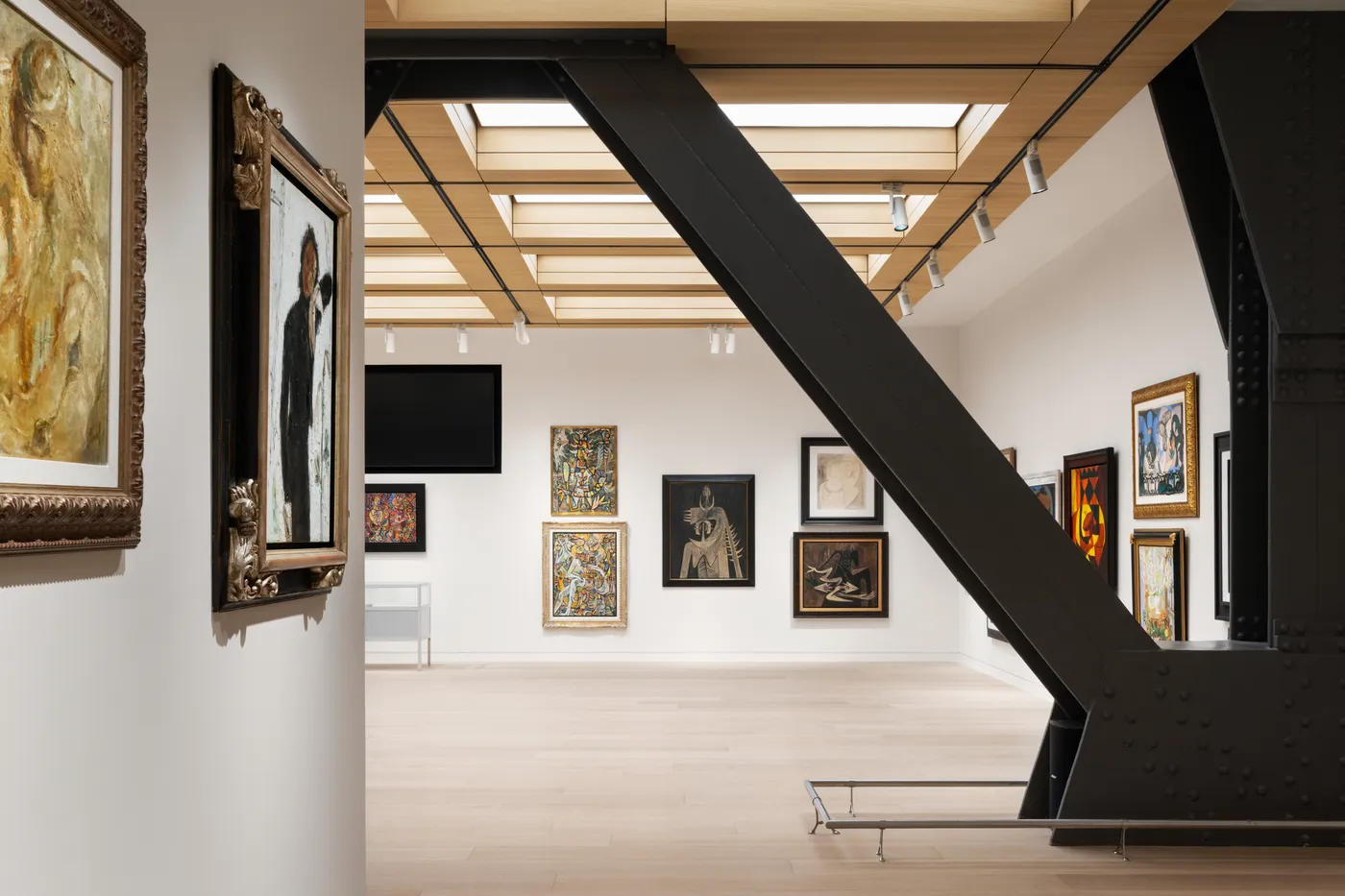
Photo: Colin Miller/Courtesy Bonhams
Now, after a meticulous restoration — unveiling gold-and-green marble floors once hidden beneath carpet and frescoed domes carefully repaired — the rotunda reopens to the public with a new purpose.
Instead of concert grands, glass vitrines now showcase Hermès bags in alligator and red leather, rare Rolex watches, and museum-worthy collectibles. A 1910 Steinway once used by Elton John to record Caribou (estimated at $250,000–$300,000) serves as a poetic bridge between past and present.
Designed for Performance — In a Different Key
Interiors by Gensler subtly nod to Steinway’s heritage without veering into nostalgia. A shimmering gold-toned wall evokes theatrical curtains. A sweeping staircase — thin brass treads glowing beneath starburst chandeliers — leads to the primary auction floor, where the gavel will fall beneath metallic silver accents and velvet-lined corridors.

Courtesy Bonhams
The architecture mirrors Bonhams’ brand: respectful of history, but forward-facing. Glamorous, but restrained.
And for the first time, the auction house consolidates its New York operations under one roof — offices tucked discreetly behind gallery walls and across the fifth floor.

Courtesy Bonhams
A Strategic Address
Perhaps the most compelling detail is the frontage itself. The expansive glass façade on 57th Street signals openness — an “approachable auction house,” as U.S. managing director Lilly Chan describes it.
Yet upstairs, in the supertall 111 West 57th Street, residents enjoy a different vantage point. Through tinted windows, they glimpse the rotunda below. They receive VIP access to events. And via the 58th Street porte cochère, they may even catch sight of classic cars arriving for sale.

It’s a subtle but powerful ecosystem: art, architecture, wealth, and heritage layered into one address.
Culture, Capital, and Cachet
What makes this move compelling isn’t just square footage or design — it’s symbolism.
Billionaires’ Row has long been about vertical living and record-breaking real estate. Bonhams introduces something different: cultural liquidity. Tangible assets. Objects with provenance and narrative.
From 1925’s Steinway recitals to 2026’s Hermès auctions, the building has always been about performance. The medium has changed. The audience has evolved.
But the stage remains.
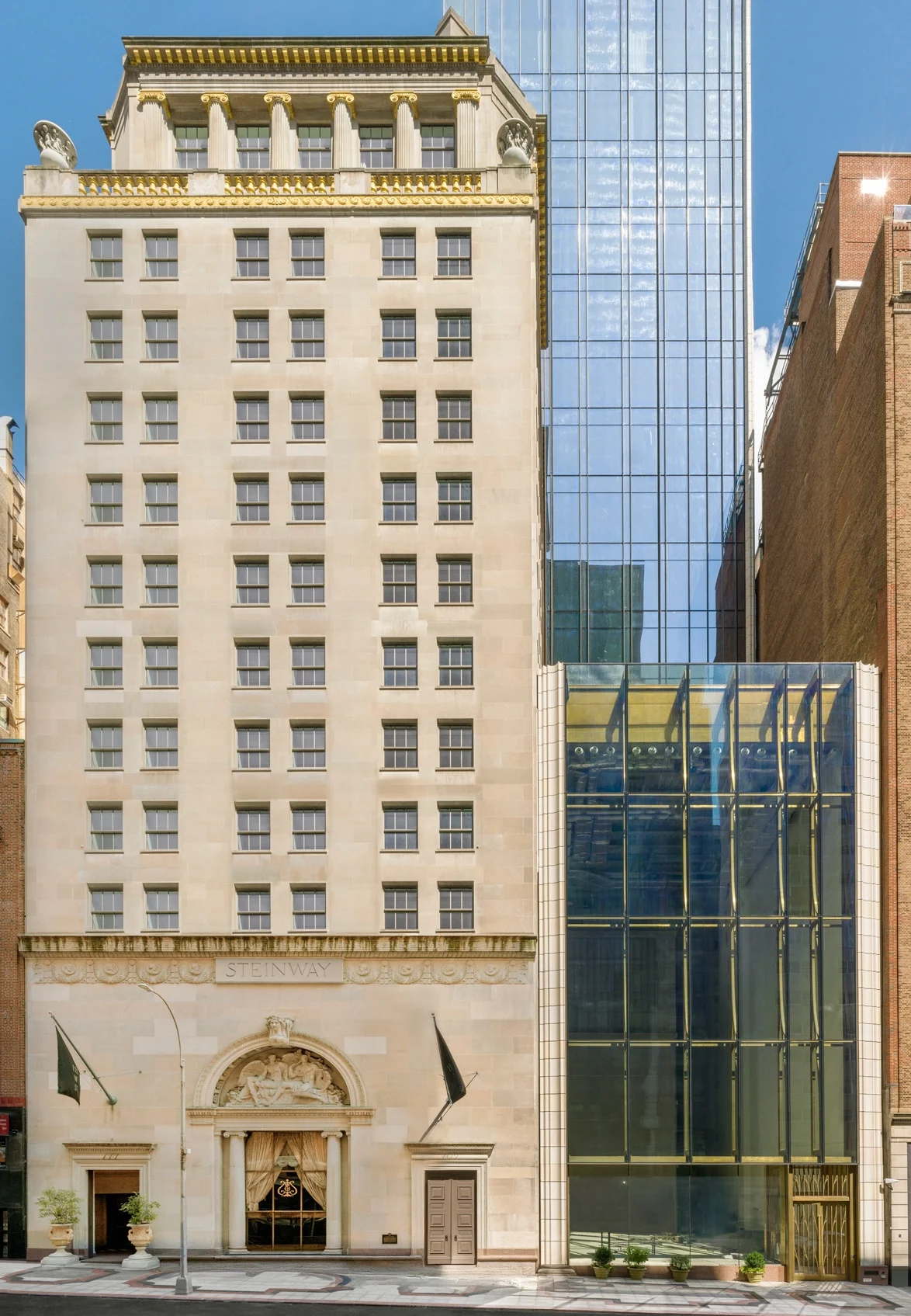
The new location of Bonhams New York Headquarters, 111 West 57th Street.
